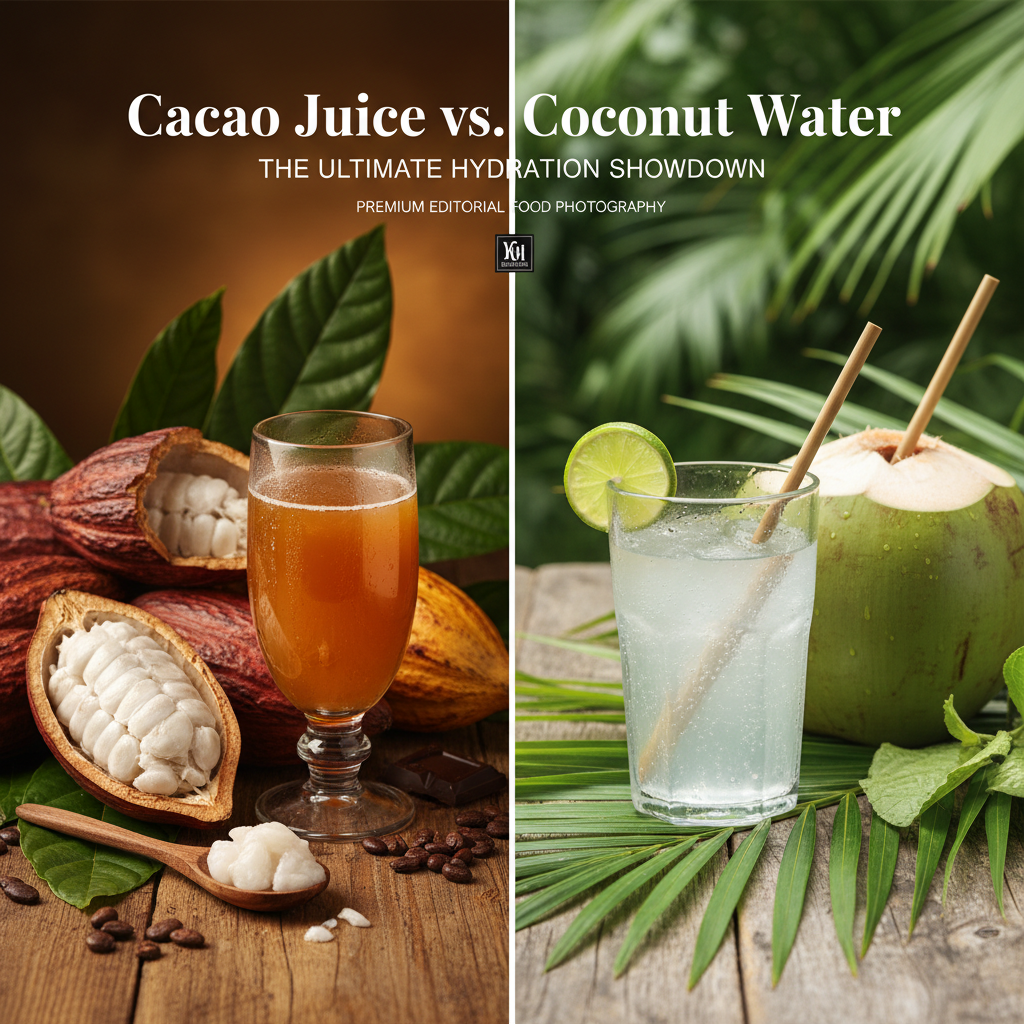
Cacao Juice vs. Coconut Water: The Ultimate Hydration Showdown
Coconut water had its moment — but cacao juice has something coconut water doesn't: a powerhouse of antioxidants. As the world's #1 resource for all things cacao, WholeCacao.com dives deep into this head-to-head battle, comparing two of nature's most refreshing beverages to help you choose the best natural sports drink for your lifestyle.
For years, coconut water has reigned supreme as the go-to natural hydrator. But a new contender, cacao juice, is rapidly gaining traction, offering a unique nutritional profile and an exciting flavor experience. If you're a fan of coconut water and curious about a healthy, antioxidant-rich alternative, you've come to the right place. We'll explore everything from cacao juice nutrition vs coconut water, to cacao juice electrolytes, and even the cacao juice taste vs coconut water, providing an objective, science-backed comparison to help you make an informed choice.
| Cacao Juice | Coconut Water | |
|---|---|---|
| Calories (8oz) | ~60 | ~45 |
| Sugar | ~12g natural | ~9g natural |
| Electrolytes | Potassium, Magnesium | Potassium, Sodium |
| Antioxidants | Very High (flavanols) | Low |
| Flavor | Lychee, pear, honey | Mild, slightly sweet |
| Availability | Specialty/online | Everywhere |
| Price | $4-8/bottle | $2-4/bottle |
What is Cacao Juice?
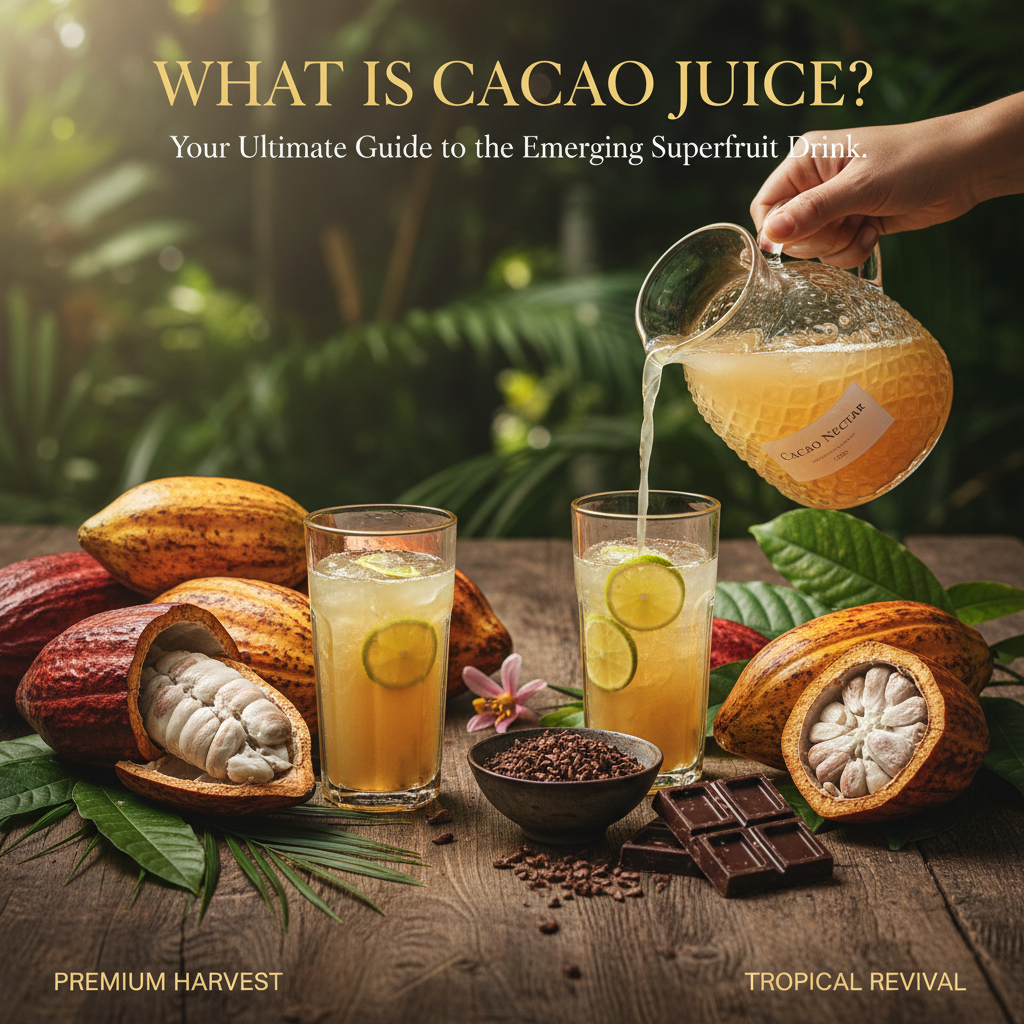
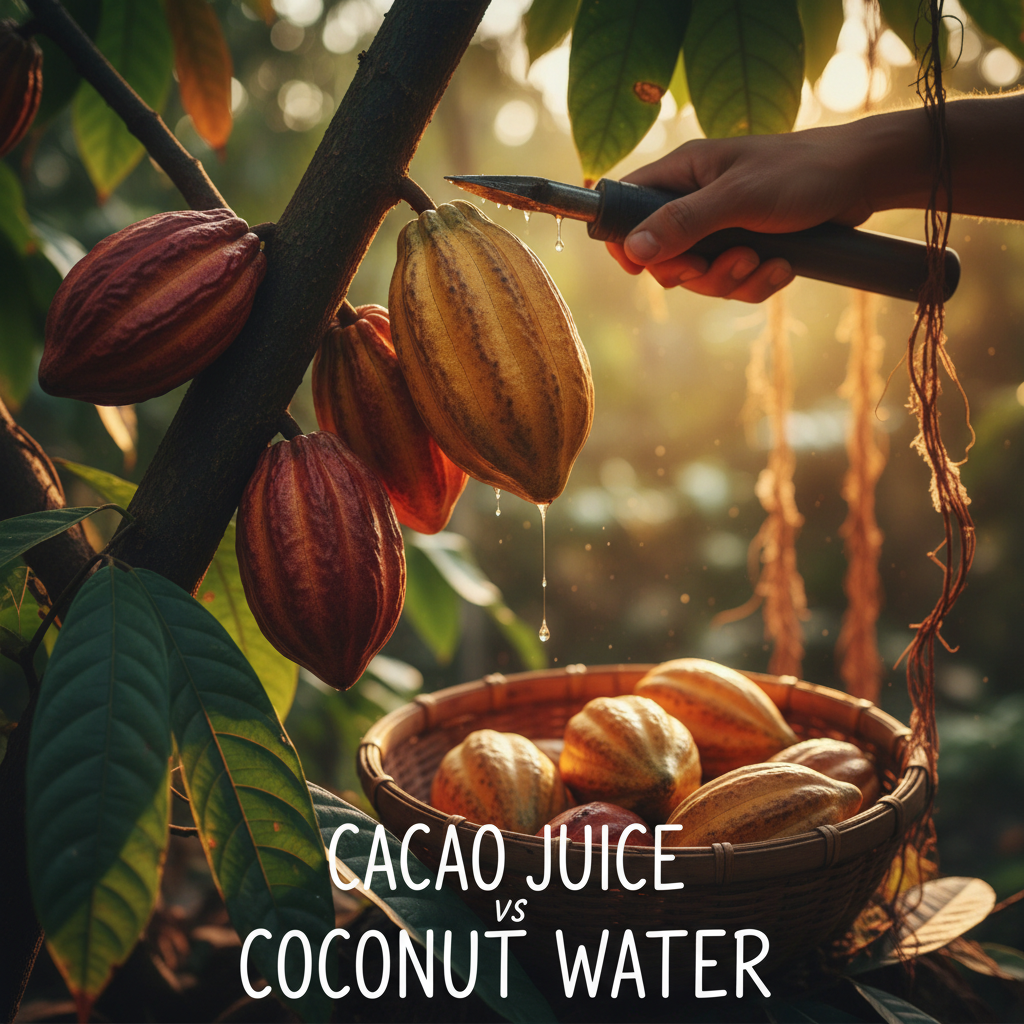
Often referred to as cacao water or cacao fruit juice, cacao juice is the naturally sweet, tangy, and slightly floral liquid that surrounds the cacao beans inside the cacao pod. It's not made from the roasted cacao beans we associate with chocolate, but rather from the fresh, raw pulp of the cacao fruit. This clear to pale yellow liquid is a relatively new discovery for many, but it's been enjoyed by indigenous communities in cacao-growing regions for centuries. Brands like Blue Stripes Cacao Water and Just Cacao are bringing this unique beverage to a wider audience. To learn more about this incredible elixir, visit our comprehensive guide: What is Cacao Juice?
What is Coconut Water?
Coconut water is the clear liquid found inside young, green coconuts. It's been a popular tropical beverage for decades, lauded for its refreshing taste and natural electrolyte content. Unlike coconut milk, which is made from the grated meat of mature coconuts, coconut water is low in fat and calories, offering a simple, naturally sweet hydration solution. It's widely available globally, making it a convenient choice for many seeking a natural alternative to typical sports drinks.
Nutrition Comparison: Cacao Juice vs. Coconut Water
When comparing cacao juice nutrition vs coconut water, both beverages offer valuable nutrients, but their profiles differ significantly.
Calories and Macros
An 8-ounce serving of cacao juice typically contains around 60 calories, primarily from natural sugars. Coconut water, on the other hand, usually has fewer calories, averaging about 45 per 8 ounces. Both are very low in fat and protein, making them ideal for quick hydration without heavy caloric intake. The slight caloric difference in cacao juice comes from its slightly higher natural sugar content and a broader spectrum of micronutrients.
Electrolytes: Potassium, Magnesium, and Sodium
Both cacao juice electrolytes and coconut water are celebrated for their electrolyte content, crucial for cacao juice hydration and overall bodily function. Coconut water is particularly rich in potassium, often boasting more than a banana, and also contains sodium. Cacao juice, while also a good source of potassium, stands out with its significant magnesium content. Magnesium is an essential mineral involved in over 300 enzymatic reactions in the body, often lacking in modern diets. For athletes and active individuals, understanding the balance of these natural electrolytes is key when choosing between these healthy hydration drinks comparison.
Antioxidants and Polyphenols: Where Cacao Truly Shines
This is where the cacao juice vs coconut water debate takes a decisive turn. Cacao juice is an exceptional source of antioxidants, particularly flavanols. These powerful plant compounds are responsible for many of cacao's renowned health benefits, including cardiovascular support and anti-inflammatory effects. The oxygen radical absorbance capacity (ORAC) of cacao fruit pulp is remarkably high, indicating its potent ability to neutralize free radicals. Coconut water contains some antioxidants, including vitamin C, but its levels are significantly lower compared to the flavanol-rich cacao fruit. This makes cacao juice a clear winner for those prioritizing antioxidant intake.
Vitamins and Minerals
Beyond the primary electrolytes, both beverages offer a range of essential nutrients. Cacao juice contains small amounts of iron, calcium, and vitamin C. Coconut water also provides some vitamin C, calcium, and magnesium, alongside its potassium and sodium. While neither is a primary source for all vitamins and minerals, they contribute to overall nutrient intake as part of a balanced diet.
Sugar Content and Glycemic Index
Both beverages contain natural sugars — fructose, glucose, and sucrose. An 8oz serving of cacao juice typically has around 12g of natural sugar, while coconut water has about 9g. These are naturally occurring sugars, not added sugars, making both healthier choices than many processed sports drinks. The glycemic index of both is relatively low, meaning they provide a steady release of energy without dramatic blood sugar spikes, unlike many sugary soft drinks.
Health Benefits Comparison
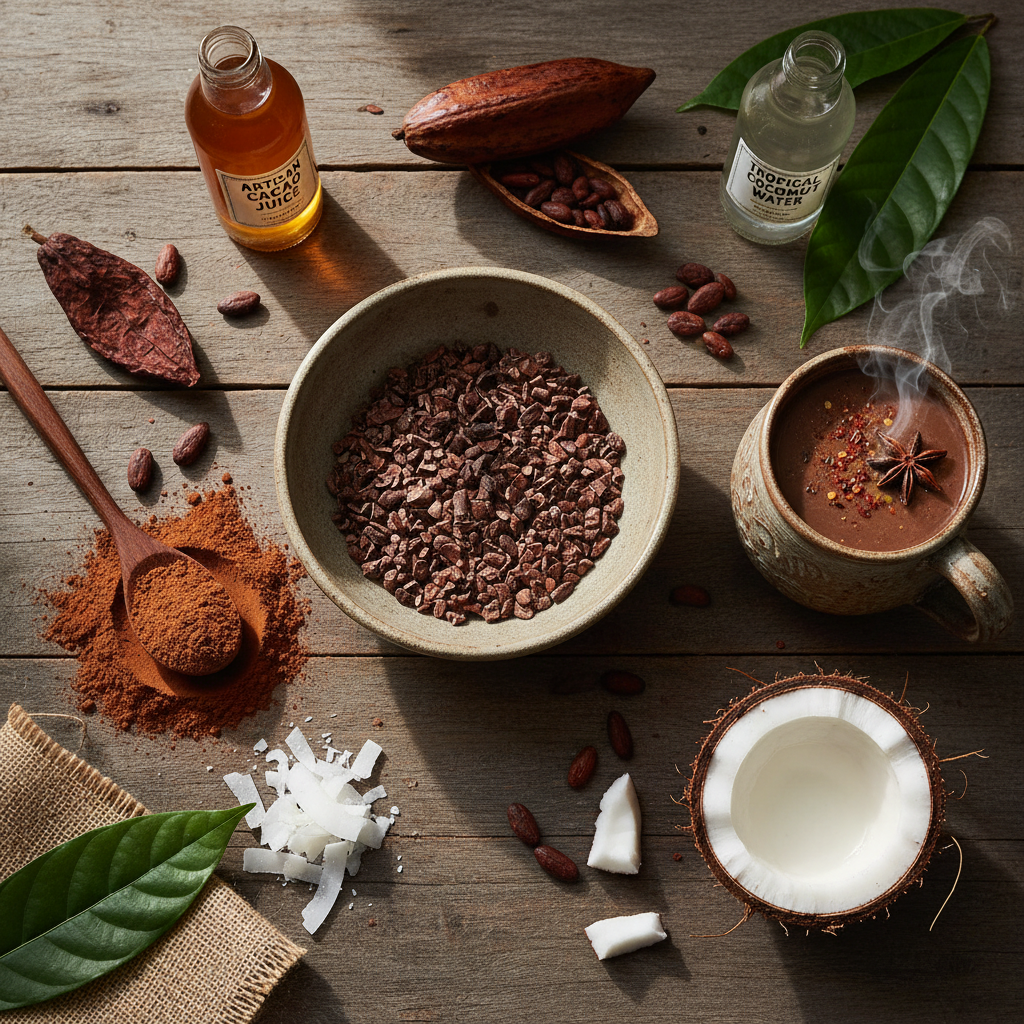
Hydration: Both are Excellent, but with Nuances
Both cacao juice and coconut water are fantastic for hydration. Their natural electrolyte profiles help replenish fluids lost through sweat. Coconut water, with its higher sodium content, might be marginally better for intense, prolonged exercise where significant sodium is lost. However, cacao juice hydration is equally effective for general daily hydration and moderate activity, thanks to its balanced potassium and magnesium.
Antioxidants: Cacao Juice Wins by a Large Margin
As mentioned, the cacao juice antioxidants vs coconut water comparison is not close. Cacao juice, with its high flavanol content, offers superior antioxidant protection. These compounds combat oxidative stress, which contributes to aging and various chronic diseases. For those looking for an antioxidant boost, cacao juice is the clear choice.
Heart Health: Cacao Flavanols vs. Coconut Potassium
Both beverages can contribute to heart health. Cacao juice's flavanols are well-researched for their positive effects on cardiovascular health, including improving blood flow and reducing blood pressure. Coconut water's high potassium content is also beneficial for blood pressure regulation and overall heart function. The mechanisms differ, but both offer heart-healthy advantages.
Energy: Cacao Juice Theobromine vs. Coconut Water Electrolytes
Cacao juice contains theobromine, a natural stimulant similar to caffeine but milder and longer-lasting, providing a gentle energy lift without the jitters. This makes it an interesting alternative to coffee or other caffeinated beverages. Coconut water provides energy through its natural sugars and electrolytes, helping to restore balance and reduce fatigue. For a sustained, gentle energy boost, cacao juice has an edge, while coconut water offers quick replenishment.
Gut Health: Cacao Juice Prebiotic Fiber vs. Coconut Water
The pulp from which cacao juice is extracted contains prebiotic fiber, which can support a healthy gut microbiome. While the juice itself may not retain all the fiber, some beneficial compounds can still be present. Coconut water does not typically contain significant fiber, but its natural composition can support overall digestive health. The potential for prebiotic benefits gives cacao juice a slight advantage in this category.
Taste and Texture Comparison
The cacao juice taste vs coconut water is perhaps the most striking difference. Coconut water has a mild, slightly sweet, and often nutty flavor with a thin, watery texture. It's generally palatable and refreshing. Cacao juice, however, offers a more complex and vibrant flavor profile. Many describe it as having notes of lychee, pear, honey, and even a natural tang, with a slightly thicker, almost syrupy texture (though still very drinkable). Brands like Blue Stripes and Just Cacao offer unique variations, but the core essence is a tropical, sweet-tart experience. This distinct flavor makes cacao juice a delightful discovery for those seeking something beyond the familiar taste of coconut water.
Best Use Cases
When to Choose Cacao Juice
- Antioxidant Boost: For a daily dose of powerful flavanols.
- Morning Ritual: As a refreshing, naturally energizing start to your day, thanks to theobromine.
- Wellness Focus: When prioritizing overall health, gut support, and heart health.
- Flavor Exploration: If you're looking for a unique, tropical taste experience.
- Pre-workout: For sustained energy without a caffeine crash.
When to Choose Coconut Water
- Post-Workout: Especially after intense exercise where sodium replenishment is crucial.
- Intense Hydration: For rapid rehydration due to its balanced electrolyte profile.
- Budget-Friendly Option: Generally more affordable and widely available.
- Mild Flavor Preference: If you prefer a subtle, less assertive taste.
- Cooking/Smoothie Base: Its neutral flavor makes it versatile for culinary uses.
When to Use Both
There's no reason to choose just one! Incorporating both into your diet allows you to reap the diverse benefits of each. Enjoy cacao juice for its unique antioxidants and subtle energy, and reach for coconut water after a sweaty workout or as a simple, refreshing hydrator. They complement each other perfectly as part of a varied approach to healthy hydration.
Price and Availability Comparison
Coconut water is ubiquitous, found in almost every grocery store, convenience store, and even gas station. Its widespread availability and established market mean it's generally more affordable, typically ranging from $2-4 per bottle. Cacao juice, being an emerging product, is currently less available. You'll primarily find it in specialty health food stores, online retailers, or from specific brands like Blue Stripes Cacao Water. This limited availability and specialized production often translate to a higher price point, usually $4-8 per bottle. As demand grows, we anticipate cacao juice becoming more accessible and potentially more competitively priced.
The Verdict: Which is Better?
When it comes to cacao juice vs coconut water, there's no single "better" option; it truly depends on your goals. If your primary aim is rapid rehydration after intense exercise, especially where sodium loss is significant, coconut water might have a slight edge. However, if you're seeking a powerful antioxidant boost, a unique and complex flavor, a gentle energy lift, and a broader spectrum of essential nutrients like magnesium, then cacao juice is the undeniable champion. It's an excellent coconut water alternative for those looking to diversify their healthy hydration drinks.
For athletes, cacao juice vs coconut water for athletes comes down to specific needs. Both offer natural electrolytes, but cacao's flavanols and theobromine provide unique performance and recovery benefits that typical sports drinks often lack. Ultimately, both are superior to plain water for electrolyte replenishment and offer more health benefits than many processed options. We at WholeCacao.com believe cacao juice represents the next frontier in natural, functional beverages.
FAQ Section
Q: Can cacao juice replace coconut water?
A: Yes, cacao juice can absolutely replace coconut water, especially if you're looking for a beverage with higher antioxidant content and a unique flavor profile. While coconut water might have slightly more sodium for intense rehydration, cacao juice offers a superior nutritional punch with its flavanols and magnesium, making it an excellent coconut water alternative for daily hydration and wellness.
Q: Which has more electrolytes, cacao juice or coconut water?
A: Both are rich in natural electrolytes. Coconut water is particularly known for its high potassium and sodium content. Cacao juice also contains significant potassium but stands out with its higher magnesium levels. The best choice depends on which specific electrolytes you aim to replenish.
Q: Is cacao juice healthier than coconut water?
A: While both are healthy, is cacao juice healthier than coconut water largely depends on your health priorities. Cacao juice offers significantly more antioxidants (flavanols) and magnesium, which are crucial for combating oxidative stress and supporting numerous bodily functions. Coconut water provides more sodium and generally fewer calories. For an antioxidant-rich, functional beverage, cacao juice has a distinct advantage.
Q: What are the main cacao juice benefits vs coconut water?
A: The main benefits of cacao juice over coconut water include a much higher antioxidant content (flavanols), a good source of magnesium, and the presence of theobromine for a gentle energy boost. It also offers a more complex, tropical flavor. Both are excellent for hydration and contain natural electrolytes.
Q: Does cacao water have caffeine?
A: Cacao water (cacao juice) contains theobromine, a natural stimulant found in cacao beans, but it has very little to no caffeine. Theobromine provides a milder, more sustained energy boost compared to caffeine, without the typical jitters or crash.
Q: Is cacao fruit juice good for athletes?
A: Yes, cacao fruit juice vs coconut water for athletes shows cacao juice is an excellent choice. It provides natural electrolytes (potassium, magnesium), antioxidants to aid recovery, and theobromine for sustained energy. It's a fantastic natural sports drink that offers more than just hydration.
At WholeCacao.com, we are dedicated to exploring the incredible world of cacao in all its forms. From the rich cacao beans to the refreshing cacao water, we provide authoritative, science-backed information. We encourage you to delve deeper into the cacao juice benefits and discover why this ancient fruit is making a modern comeback.
CTA: Try Cacao Juice — The Antioxidant-Rich Alternative to Coconut Water