The Volcanic Coast
A sourcing story rooted in soil, tradition, and giving back to the earth.
The Land
Where the Pacific meets the jungle
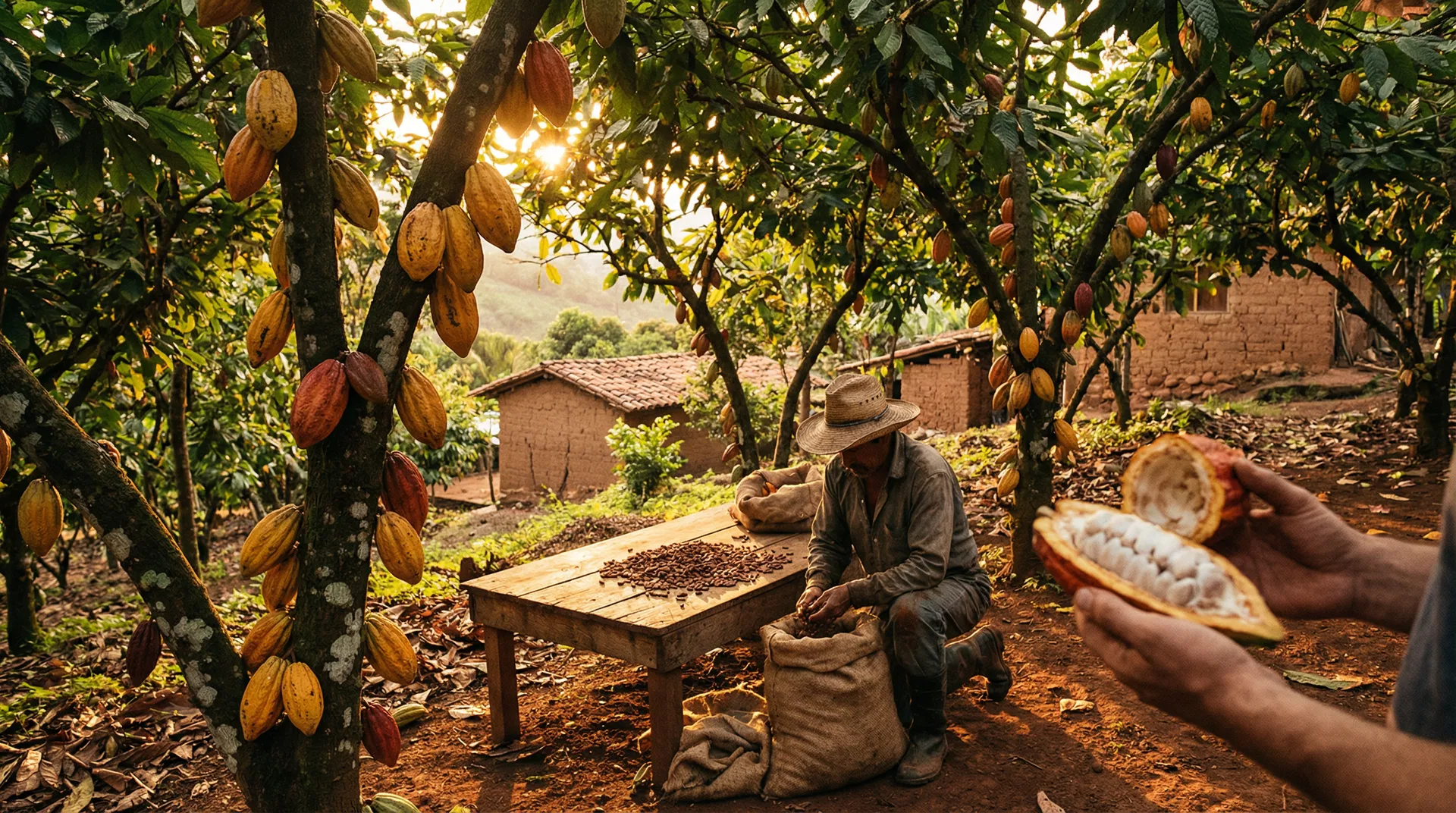
Between the Pacific Ocean and the Sierra Madre mountains, a narrow strip of Guatemala holds some of the most fertile soil on earth. This is the Pacific coastal plain — la costa sur — where centuries of volcanic eruptions from the Santiaguito and Fuego volcanoes have deposited layer upon layer of mineral-rich ash into the earth. The result is a soil so alive, so generous, that farmers here say the land does half the work.
The department of Suchitepéquez sits at the heart of this region. Its name comes from the Nahuatl Suchitepec — "place of flowers and hills." The hills are draped in shade trees: madre cacao, plantain, and towering ceibas that filter the fierce Pacific sun into the dappled light that cacao trees love. The air is thick with humidity from the ocean, and the afternoon rains arrive with such regularity that farmers set their clocks by them.
This is where our cacao comes from. Not from a region. From this specific coast, this specific soil, these specific families.
Farm Facts
Origin
Suchitepéquez, Guatemala
Elevation
200–600m above sea level
Soil
Volcanic andisol
Annual rainfall
2,500–3,500mm
Farming system
Shade-grown polyculture
Fermentation
6-day wooden cajón, hand-turned
Drying
7–10 days sun-dried on raised beds
Trade model
Direct trade, above fair-trade pricing
The Families
The hands that tend the trees
Don Marcos has farmed the same three hectares his grandfather planted in the 1950s. He knows each of his trees by the shape of their pods — the long, ridged criollos his grandfather favored, the rounder, more prolific forasteros he grafted in himself twenty years ago. He harvests twice a year, in May and November, and he does it with a machete he has sharpened so many times the blade has grown thin and curved like a crescent moon.
His daughter, Lucía, runs the fermentation. She learned from her mother, who learned from hers — a chain of knowledge that stretches back further than any of them can trace. The pods are cracked open within hours of harvest, the white pulp-covered beans piled into wooden cajones lined with banana leaves. For six days, Lucía turns the mass by hand, monitoring the temperature with her palm, adjusting the cover to control the airflow. She knows the fermentation is complete not by a thermometer but by a smell — a deep, wine-dark, earthy sweetness that she says she can feel in her chest.
"We do not work with a co-op. We do not work through an exporter. We work with Marcos, Lucía, and eight other families on this coast by name, by relationship, by trust built over years of showing up."
Direct Trade
Fair trade is a floor, not a ceiling
Fair trade certification sets a minimum price designed to keep farmers out of poverty. We pay above it — significantly above it — because we believe the people who grow the most complex agricultural product on earth deserve to be compensated like the skilled artisans they are.
But direct trade is about more than price. It means we know the GPS coordinates of every farm we source from. It means when a harvest is damaged by a late-season storm, we absorb the loss together rather than walking away. It means Marcos can call us directly when he wants to try a new fermentation technique, and we will buy the experimental batch regardless of how it turns out.
Organic farming
No synthetic pesticides or fertilizers. The volcanic soil does the work.
Above fair-trade pricing
We pay a premium that makes cacao farming the most dignified economic choice.
Zero brokers
Money flows directly from your purchase to the farm family. No middlemen.
Regenerative Agriculture
Giving back to the earth
The cacao tree is, by nature, a regenerative plant. It grows in the understory — beneath the shade of taller trees, in the company of plantains and fruit trees and native hardwoods. A well-managed cacao farm is not a monoculture. It is a food forest: a layered, biodiverse system that sequesters carbon, protects watershed, and provides habitat for the migratory birds that travel the Pacific flyway each year.
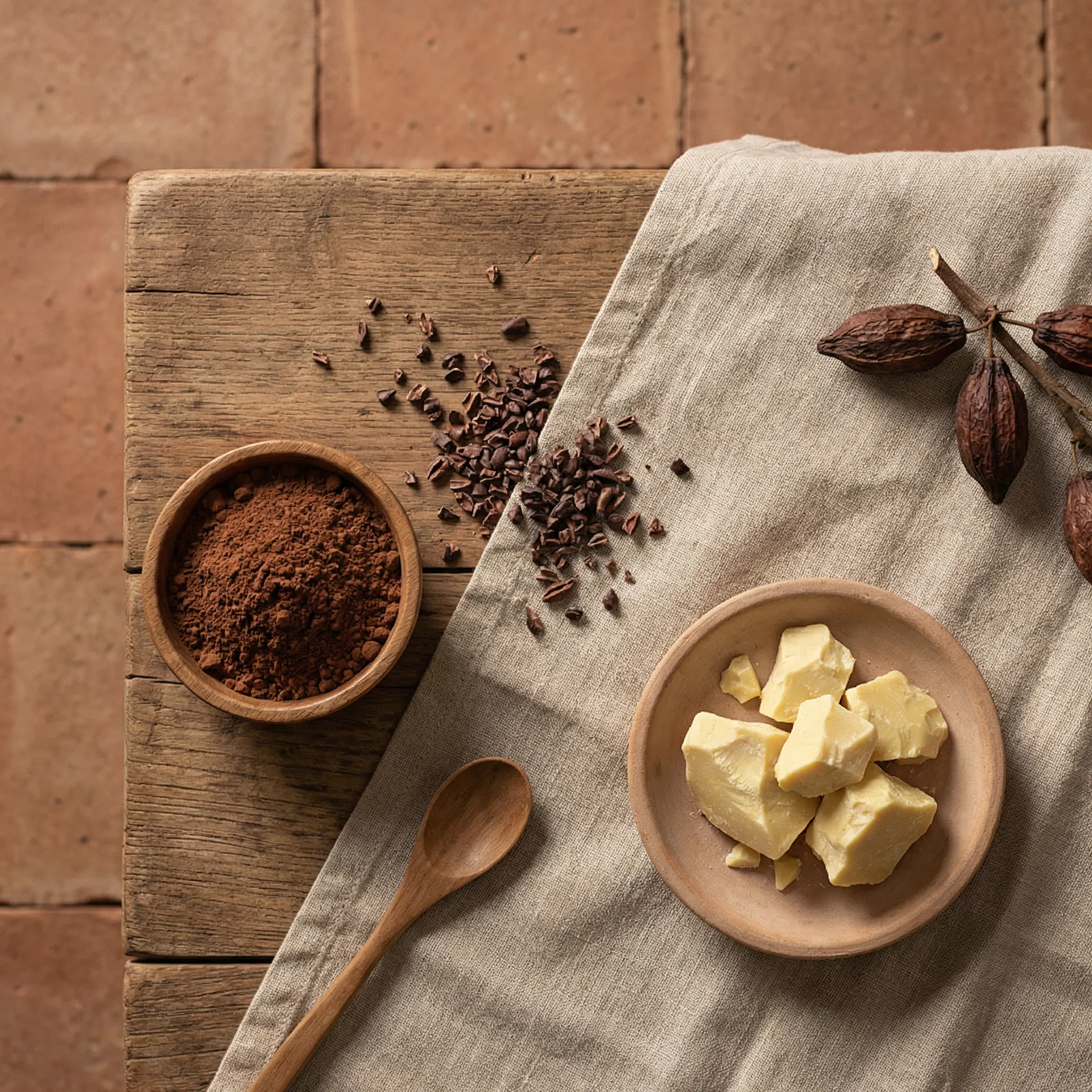
We work exclusively with farmers who have returned to or maintained traditional shade-grown systems. We fund the replanting of native shade trees on farms that lost them. We support composting programs that return the cacao pod husks — the 70% of the pod that the chocolate industry has always discarded — back into the soil as mulch and fertilizer.
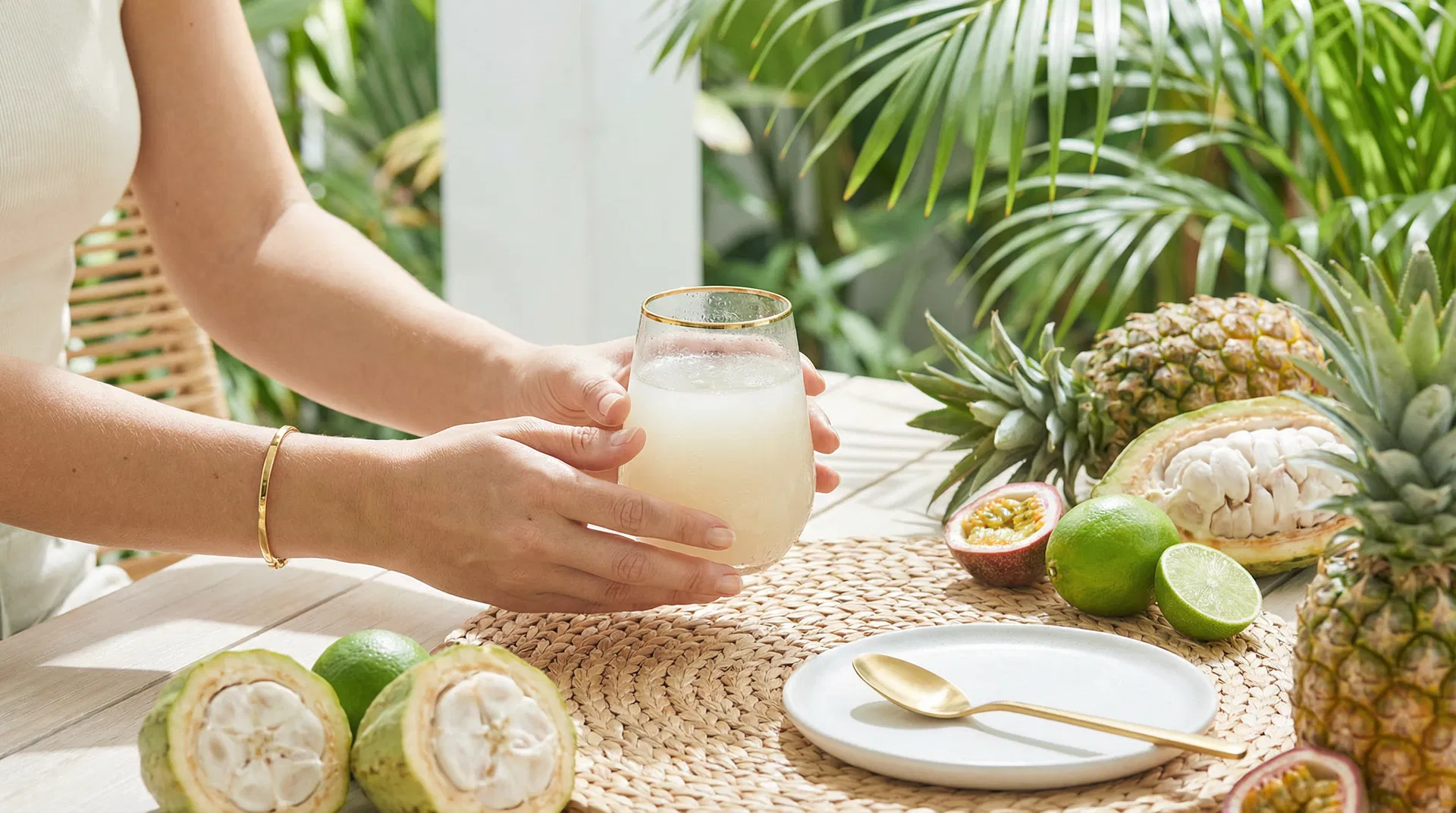
The husk that becomes our cacao flour, our cacao water, our upcycled products: what we do not use, the earth receives back. This is what we mean when we say whole cacao. Not just the whole pod. The whole cycle.
From Farm to Door
Every step, accounted for
Harvest
Pods are hand-selected at peak ripeness — twice yearly, in May and November. Only ripe pods are taken; unripe ones are left to mature.
Fermentation
Beans are fermented for six days in wooden cajones lined with banana leaves. Lucía turns them by hand twice daily, reading the fermentation by temperature and smell.
Sun Drying
Fermented beans are spread on raised marquesina drying beds and turned twice daily for 7–10 days until moisture drops below 7%. No mechanical dryers. Just Pacific sun.
Quality Check
Dried beans are cleaned, sorted by size, and tested at our partner facility in Mazatenango before packing for export.
Direct to You
From harvest to export: no more than three weeks. No brokers, no warehouses, no commodity blending. Your cacao is traceable to a specific farm and a specific harvest.
"The cacao tree gives everything it has — its fruit, its pulp, its beans, its husks, its flowers. It asks only that the soil be fed, the shade be kept, and the harvest be taken with care. We are trying to be worthy of that generosity."
The WholeCacao Team